Human Services Education in Iowa
Iowa’s human services field is growing, with demand in areas such as behavioral health, child welfare, and aging services. A bachelor’s degree opens entry-level roles. A master’s degree unlocks clinical and management positions. According to the Bureau of Labor Statistics, social workers in Iowa earn a median annual salary of $50,710, with some roles projected to grow faster than the national average.
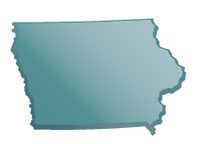
Demand for human services workers exists across the state, from Des Moines and Cedar Rapids to rural counties where mental health resources may be limited in some areas. State agencies like the Iowa Department of Health and Human Services employ eligibility workers, case managers, and behavioral health specialists. Hospitals, school districts, and nonprofits fill out the employer landscape. Job availability is strong, and the key consideration is career path and education level.
This page breaks down career options by education level, covers what Iowa workers earn across the major human services occupations, and points you toward the licensing resources you’ll need to move forward.


Careers by Education Level in Iowa
Human services careers in Iowa generally follow a progression: more education unlocks more responsibility, higher pay, and greater autonomy. Here’s a summary of what’s available at each level.
| Education Level | Example Careers | Typical Degree |
|---|---|---|
| Bachelor’s Degree | Licensed Social Worker (with licensure), Probation Officer, Rehabilitation Case Worker, Community Outreach Worker, Child Life Specialist | BSW, BS in Psychology or Sociology, BS in Child Life |
| Master’s Degree | Licensed Master Social Worker (with licensure), Licensed Independent Social Worker (with licensure), Marriage and Family Therapist (with licensure), Child Welfare Case Manager, Community Service Manager | MSW (CSWE-accredited), MA in Counseling or MFT |
| Doctoral Degree | Research team lead, University faculty, Private practice clinician, Human services agency director | PhD or DSW in Social Work, EdD, PsyD |
Bachelor’s-Level Careers in Iowa
A bachelor’s degree in social work (BSW) from a CSWE-accredited program is the standard educational requirement for the Licensed Social Worker (LSW) credential in Iowa, which is handled through the Iowa Board of Social Work. That credential opens doors in child welfare agencies, community mental health centers, and the Iowa Department of Health and Human Services.
Other bachelor’s-level roles don’t require a social work degree specifically. Probation officers typically hold degrees in criminal justice, sociology, or psychology, and most are employed through the Iowa Department of Corrections. Rehabilitation case workers help Iowans with disabilities return to employment and are commonly hired through Iowa Vocational Rehabilitation Services. Community outreach workers are employed by nonprofits and community action agencies across the state, including organizations in the Iowa Community Action network. Child Life Specialists, who help children and families cope with hospitalization and chronic illness, work in Iowa’s 60-plus hospital facilities and require a specialized bachelor’s degree in child life.
If you’re interested in substance abuse counseling at the bachelor’s level, Iowa has its own certification pathway. The Iowa Board of Certification (IBC) oversees credentials, including the Certified Alcohol and Drug Counselor (CADC). See our Iowa substance abuse counselor certification guide for a full breakdown of requirements.
Master’s-Level Careers in Iowa
The master’s degree is where the clinical and management tracks diverge. A Master of Social Work (MSW) from a CSWE-accredited program qualifies you for the Licensed Master Social Worker (LMSW) credential. With supervised clinical hours added, you can pursue the Licensed Independent Social Worker (LISW), which allows independent clinical practice.
Iowa’s counseling field requires separate licensure through the Iowa Board of Behavioral Science. Marriage and Family Therapists need an MFT-specific master’s degree along with supervised postgraduate hours. Mental health counselors pursue the Licensed Mental Health Counselor (LMHC) credential. For a full overview of Iowa counseling licensure, see our Iowa counselor certification guide.
Social and Community Service Managers, who oversee programs and staff at nonprofits, government agencies, and healthcare organizations, typically hold an MSW, MBA, or related master’s degree. This is one of the higher-paying roles in this category: Iowa managers in this category earned a median of $62,920 annually, according to BLS data.
For a detailed look at MSW programs available in the state, visit our Iowa MSW programs page.
Doctoral-Level Careers in Iowa
A doctorate in social work or a related discipline opens paths that aren’t accessible otherwise: leading research teams, teaching at the university level, and holding executive leadership positions in larger human services organizations. Iowa State University and the University of Iowa both have programs in social science disciplines that feed into these careers. For those who want independent clinical practice with the broadest possible scope, a doctoral-level credential combined with clinical licensure provides the most flexibility. For those considering psychology specifically, see our Iowa psychology licensure guide.
Iowa Human Services Salaries and Job Growth
Some roles are projected to grow faster than the national average in Iowa. The table below summarizes median annual salaries and projected job growth for the state’s major human services occupations, based on Bureau of Labor Statistics data.
| Occupation | Median Annual Salary (Iowa) | Projected Growth (2022–2032) | Avg. Annual Openings |
|---|---|---|---|
| Social Workers | $50,710 | About 11% (child/family/school) | 320 |
| Mental Health & Substance Abuse Social Workers | $50,710* | About 21% | 110 |
| Substance Abuse, Behavioral Disorder & Mental Health Counselors | $60,880 | — | — |
| Social & Community Service Managers | $62,920 | About 18% | 320 |
| Social & Human Services Assistants | $40,300 | About 18% | 600 |
*Social workers’ salary reflects the all-category median. Mental health and substance abuse social workers are a subset within this group.
These figures indicate notable growth. Mental health and substance abuse social workers are projected to grow about 21% through 2032 in Iowa. Social and human services assistants, a common entry point into the field, are projected to grow about 18% with 600 average annual openings statewide. Iowa’s behavioral health workforce has ongoing workforce demand, particularly in rural areas, and that’s reflected in the projections.
Advancing to management or clinical licensure is often associated with higher earnings in this field. Specializations in behavioral health and aging services tend to offer stronger compensation than generalist roles at the same education level.
Frequently Asked Questions
What degree do I need to start a career in human services in Iowa?
Most entry-level positions in Iowa require at least a bachelor’s degree in social work, psychology, sociology, or a related field. The specific degree depends on the role: a BSW from a CSWE-accredited program is required for the Licensed Social Worker (LSW) credential, while roles like probation officer or community outreach worker accept a broader range of bachelor’s degrees.
Does Iowa require licensure to work in social work?
Yes. Iowa licenses social workers at three levels: Licensed Bachelor Social Worker (LBSW), Licensed Master Social Worker (LMSW), and Licensed Independent Social Worker (LISW). Each tier has its own education and supervised experience requirements. See our Iowa social work licensure guide for a full breakdown.
What are the highest-paying human services jobs in Iowa?
Social and Community Service Managers earn the highest median salary in Iowa’s human services sector, at $62,920 annually, according to BLS data. Substance abuse, behavioral disorder, and mental health counselors come in at a median of $60,880. Advancing to management or clinical licensure is often associated with higher earnings in this field.
Where do human services workers find jobs in Iowa?
The Iowa Department of Health and Human Services is one of the state’s largest employers of social workers and case managers. Other major employers include hospitals, school districts, community mental health centers, and nonprofits. Iowa Vocational Rehabilitation Services, the Department of Corrections, and community action agencies also hire regularly across multiple specialties.
Is there demand for human services workers in rural Iowa?
Yes. Rural Iowa counties face ongoing shortages of mental health providers and social services staff. For workers willing to practice in underserved areas, job availability tends to be strong, and some positions may qualify for loan repayment programs through state or federal initiatives.
Key Takeaways
- Education level determines career tier: a bachelor’s degree opens entry-level and paraprofessional roles, and a master’s degree is required for clinical licensure and management positions.
- Licensure is required for social work practice. Iowa’s Board of Social Work oversees three license tiers: LBSW, LMSW, and LISW. Counseling and substance abuse credentials follow separate pathways.
- Job growth is projected to be strong in behavioral health. Mental health and substance abuse social workers are projected to grow about 21% in Iowa through 2032, with 600 average annual openings for human services assistants alone.
- Salaries range from entry-level to management: Iowa human services workers earn between $40,300 (assistants) and $62,920 (community service managers) at the median, with higher earnings often associated with licensure and specialization.
- Rural Iowa has an ongoing workforce need. Workers open to rural practice will find strong demand and may qualify for loan repayment assistance.
Ready to explore your options? Use our state-by-state guides to look up licensing requirements, compare degree paths, and find accredited programs in Iowa.
2024 US Bureau of Labor Statistics salary and employment figures for Social Workers, Social and Human Services Assistants, Social and Community Service Managers, and Substance Abuse, Behavioral Disorder, and Mental Health Counselors, reflect state and national data, not school-specific information. Conditions in your area may vary. Data accessed April 2026.